My focus at the moment is on the Palaeolithic cliff/cave/tunnel systems lining the steep sides of the River Wye gorge near Ross-On-Wye UK., starting with the system leading to, and reaching beyond King Arthur’s Caves
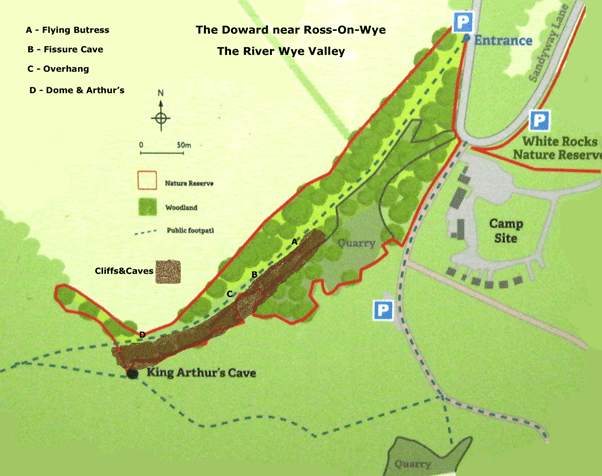
From my doorstep to the nearest parking spot on the Doward is a 15 minute journey so the area is hugely convenient. It is a rich compensation until we can return to pick up our heavy threads of research in Giza and elsewhere. We know from archaeological digs that the area was once teeming with an incredible number of exotic animal species. Some were prehistoric. Most have become extinct in the UK and a few can only be found today in small numbers elsewhere in the world. It is known that the area was populated from the Old Stone Age Palaeolithic period 40k to 12k/10k.BCE. This is a long time span and would have overlapped to the New Stone Age Neolithic period 12k/10k to 5k.BCE. The accepted distinction between those people is that the Palaeolithic people were subsistence hunter gatherers preferring hide shelters or caves, while the Neolithic people were settlers still utilising caves but evolving into fixed dwelling communities. Both had societal structures but most important to our research is the fact that Palaeolithic people communicated through sophisticated rock and Cave Art .
As evidenced across the World , their art was spectacular. It recorded in their photogenic style, their world around them and the pageant of their day. It helped preserve records and aided communication.
All these facts help us to understand a little of the ancient activity in the River Wye valley. The Cliff/Cave/Tunnel systems are evident over some miles. The area is heavily wooded with old forest. The ability to hunt abundant wild life or fish from the river Wye while utilising the local cave systems would have been a long term attraction to nomads in the Palaeolithic – just as it would have been for the later people of the Neolithic. Modestly therefore we can say that any evidence of ancient art in the River Wye Valley could at very least compliment the archaeological remains from habitation between 14k and 10k BCE which have been found there.
Having discovered some years ago that digital analysis of high definition photographs of rock surfaces can yield ancient illustrations invisible now to the naked eye, I began searching the Wye Valley for targets
A little over a week ago I spent more hours on another sortie investigating three previously identified and hard to access rock fissures. For one I would have to rappel down to gain access, but from previous attempts to reach it from a climb, I was aware of evidence to suggest it contained carvings and ancient art. The other two sites were new to me. These were the upper slope exposed entrances to fissures that would have been the top parts of caves long ago, now filled with earth, rocks and organic material. However from previous visits, the photographs showed in their depths there were etchings and illustrations surviving on the protected inner surfaces. The following gallery of photographs are some of the analysed results, sometimes paired to show the original photographs and with accompanying explanations. I can’t be more detailed with their pinpoint locations for obvious reasons. They will be subject to much more investigation, and this report is just a primer based on one targeted trip. A final publication will share everything.
The Results:
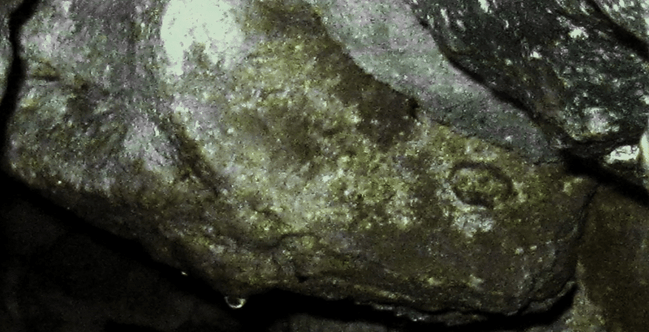
We start with ….What the hell is this ??? Inside the first fissure. The present opening only allowing me to push my arms through with my camera into the start of the chamber and take photos in every direction. Then later at home while starting to appraise the results I see in the cleft of the roof slab an object/creature/item wedged there. I can guess it is about the size of a large fist. It looks solid and organic… and it casts a shadow; but look closely and a head can be seen. On the lower body section I thought I was seeing a medallion, but closer inspection shows it is a face set like a badge. You can be sure this will be my prime target soon on another visit. I will have to excavate the entrance more to gain head and shoulders entry – and maybe retrieval ?
I rotated the enlargements to study it more closely – and it appears to be fixed with a spike.
Keep in mind that other wall illustrations make a compelling case for this filled fissure to have been the top of a cave originally. I would love to receive informed feedback from anyone with ideas to explain what it is or what it’s purpose may be. Either way I will soon find out on my next visit.


Directly below the item on the rock face I found this small strange illustration

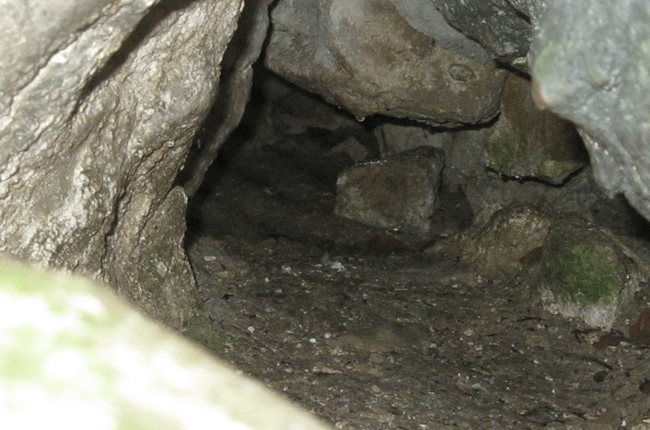
Here is a view of the fissure entrance. Notice how it appears to be deliberately hewn. I cleared away a pile of leaves to get a better visual, but there is a ton of small rockfall and soil that I will have to clear to examine the interior properly.

On the left hand side. Did you spot the strong indication of art. Here is the initial result.
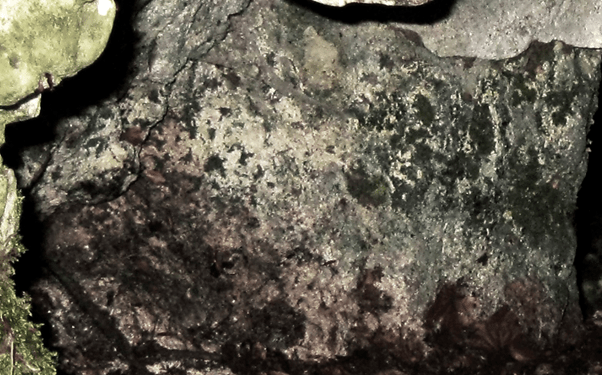
Here are more results from inside – Right hand of the opening..

Followed by more from the interior surfaces..
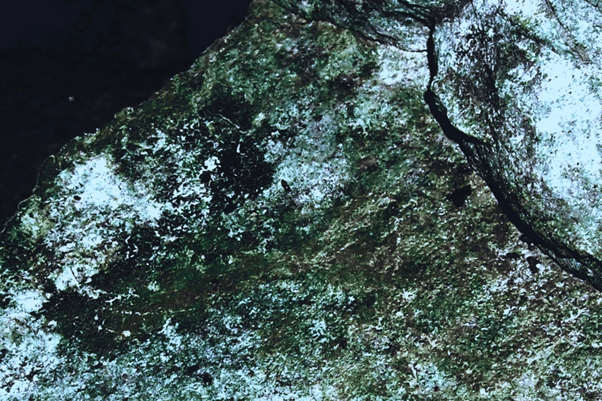
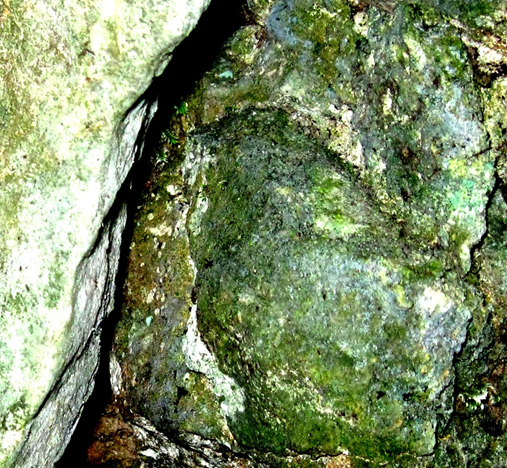

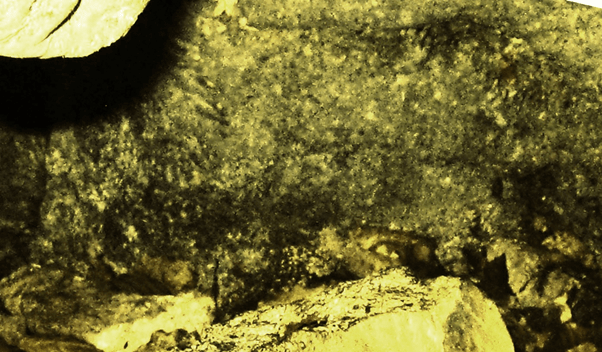
Now turning back to the original picture above showing some kind of creature. The next two analysed pictures are of the wall below and a closer crop to give more detail


I could see immediately the next section of wall was special, so I analysed it as is and then separated the left hand side so more detail can be seen. The result seems to show a high parapet with tower. An almost child-like figure waves from the parapet wall. Below it seems like seawater in tumult, but closer study shows the waves are themselves made up from a multitude of different sized theriomorphic figures.
We begin with the original picture

See below what the analysis revealed.
PS for all of these pictures there is no question that when they are displayed within a document it is impossible to view the detail properly. It is always recommended for serious researchers to copy/paste as to your own computer files and then view everything at full screen size.
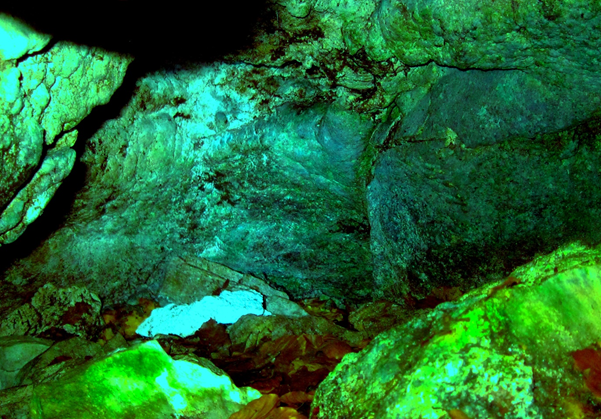
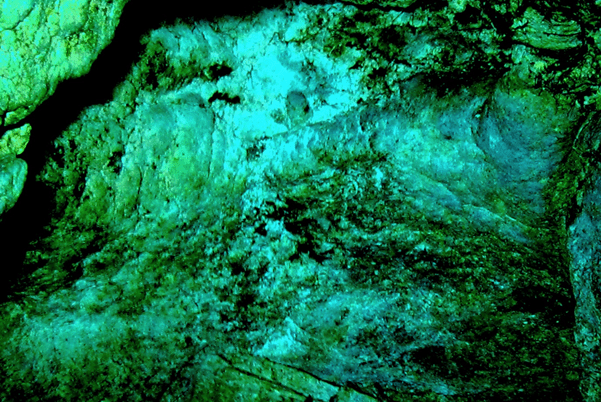
The next example is via another intriguing trio of photographs. But what is it they show? When the third frame is studied, there appears to be some kind of (metal?) mechanical shape which shows deeper more faded humanoid images of heads. First the original….
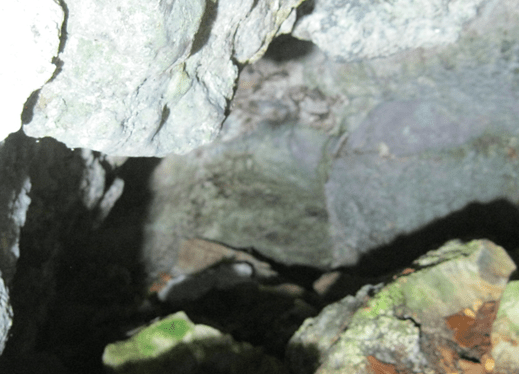


Another pairing coming up, with characters around the entrance.

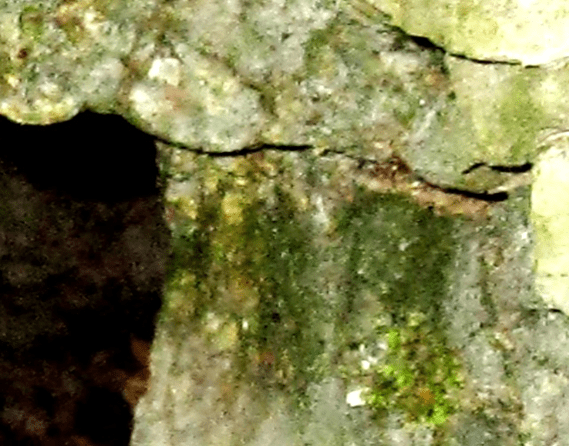
This is the smaller fissure entrance, but I believe it links up to the high cliff fissure further along on the cliff. They are roughly on the same line to access a high lookout.
Inside there are some interesting illustrations.
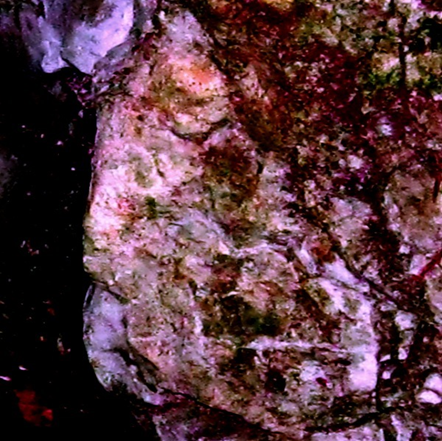

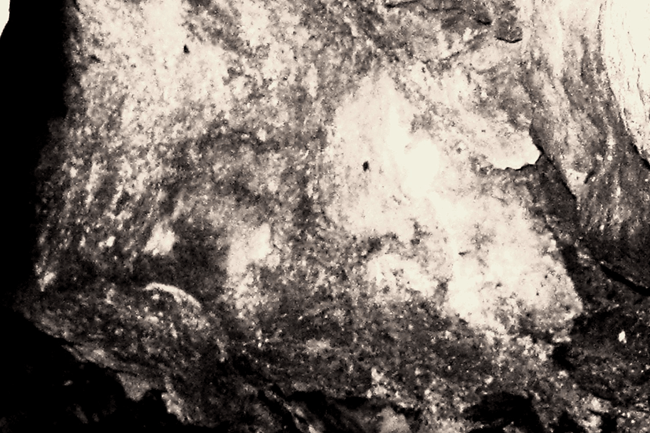


The one above is a knockout as it depicts a boat being tossed on tumultuous seas while figures forming the vertical wall on the left look down upon the scene. This is a full sized screen study to get the detail.
Next is the high fissure which I believe had back door access from another fissure entrance on the nearby slope mentioned previously. It would have been an ideal lookout for important positions below. The rock surfaces around it have figuring which are all orientated to the fissure. This is a feature often seen elsewhere as if to elevate importance.
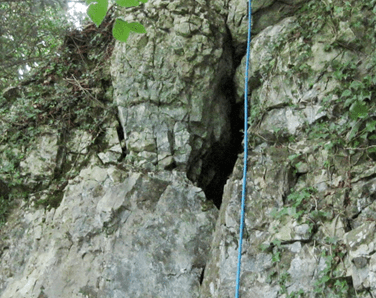
Looking down into the fissure… Can you see the figuring on the near-ground rock

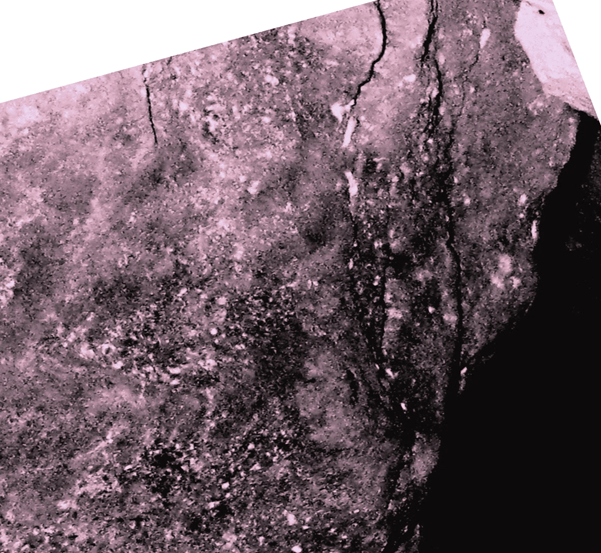
The appearance of the abundant etchings and illustrations within this high fissure indicates considerable significance. I managed to rappel down to it this time, but I am planning a safe way to get working access so I can examine and record the story on the walls. Perhaps there will be other finds.
The next sample is a complex picture. I wish I had been able to pull sharper detail from it. Take a long and deep 3D look at this on a big screen. Can you figure it? I believe it is orientated correctly

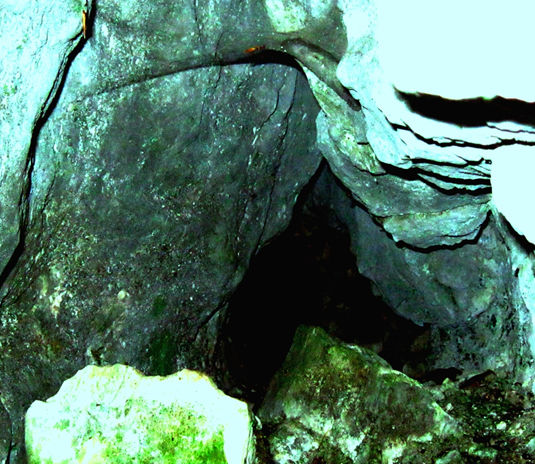
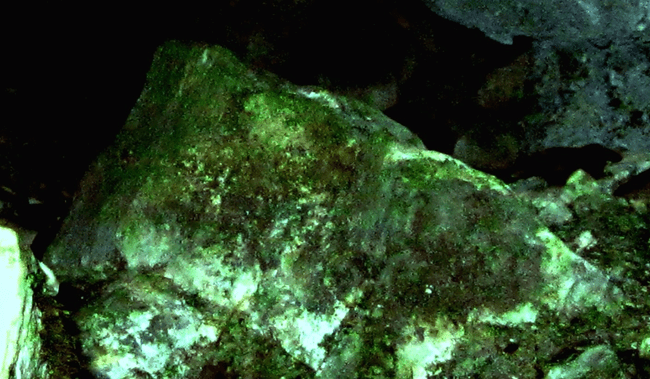
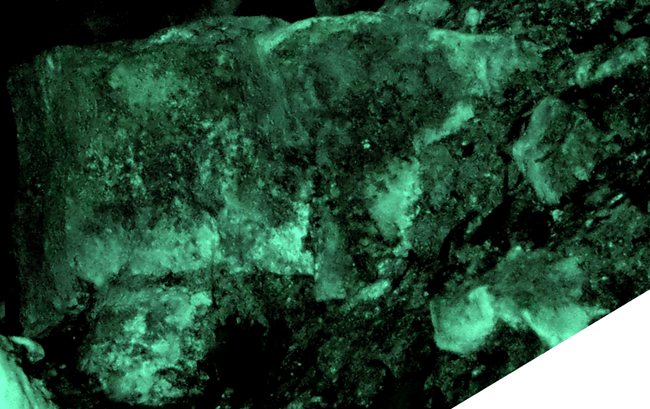
Back outside this gives a flavour of the illustrations on the exposed large rock surfaces..

Back inside the fissure, another triple pairing to check out. Original first…



And finally for now, as I was clinging to the rope at the high fissure entrance I took a picture down the face of the cliff below… This is what it yielded back to me ::

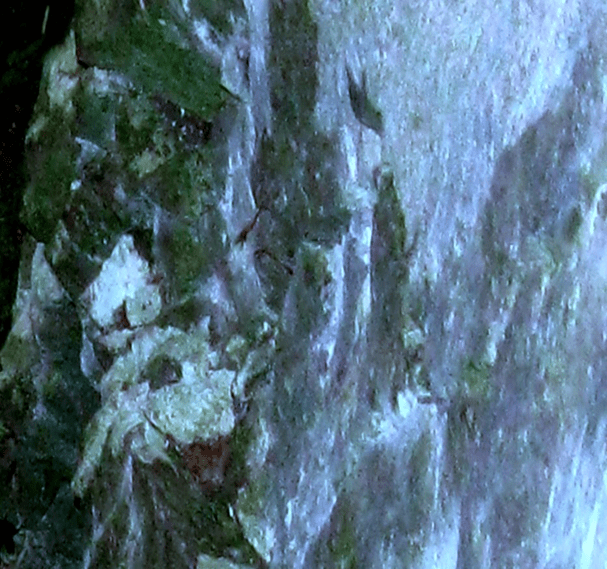
What it would be to have a line back to the minds and the times of the artists – to know what it was they were depicting. They would never have imagined that ten to forty thousand years later, though invisible now to plain sight, their visions still live on.
They left us with a non-invasive window to archaeology and understanding which any person with a good camera and the drive to understand could go forth to capture – and reveal again what was seen through the eyes of our true ancients all those years ago.
If you find this exploration interesting and you have a serious desire to contribute seriously, your comments and contributions will be most welcomed in the following comments section.
Many thanks, Richard Gabriel.
By the way as a small bonus, there is a whole rock feature I am piecing together as a potential story of how they lived. This illustrated rock was like the nameplate you or I would have on our house.
These are certainly pictures to do a big screen enlargement to see the detail of the ancient artist.
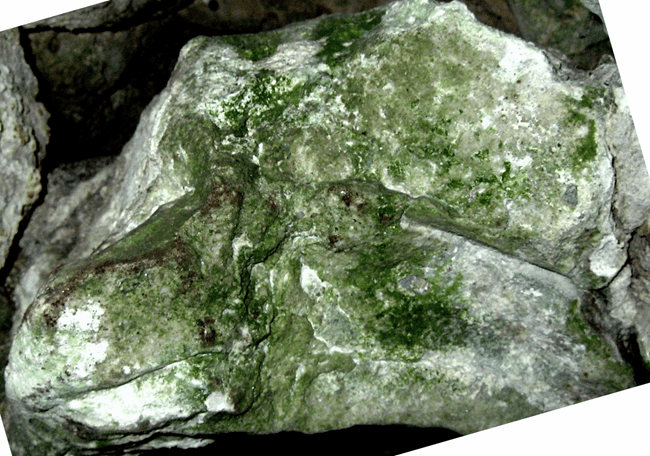
With snakes draped around him, one superimposed to form his face and another giant python resting on his head.. All around him, other creatures in symbiotic pose to laud the group king! This stone was illuminated and could be seen only when standing to present at one cave entrance.
Say hello to one of our ancestral leaders.

Until next time ….. R.G.
 The walls of ancient record
It looks as though the figures represent both humans and animals, primarily dogs. My impression overall is that the figures found at entrances serve as guards and guardians. However, there are other figures meant to represent daily life as well as anthropomorphic beings, indicating the presence of spiritual power and a warning. Even the owner has bared fangs.
LikeLiked by 1 person
Well observed Tom. Over the years I have noticed some generic traits with the artists of the time, even across country borders. One significant observation is that wherever there is an important point of focus like a special cave, or niche, or concealed place… the figures (most often theriomorphic,) are lined in rows or orientated left & right to face the same way towards the place/position of importance. This helped on one occasion during a dig to locate the shaft entrance to hidden tunnel access on the Giza Plateau. I am close to the stage among the Wye valley systems to using this in my efforts to understand how certain parts of the system were used… It is a fascinating detection opportunity which is non-invasive and is open to any dedicated pauper as well as any shrewd academic or rich man… The quest continues 🙂
LikeLike